Yarn analysis
search
  • Yarn analysis
  • Yarn analysis

Yarn analysis

€7.00
Tax included

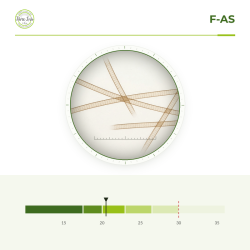
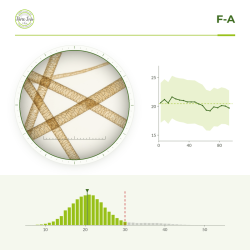
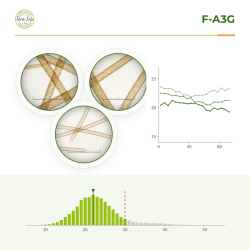
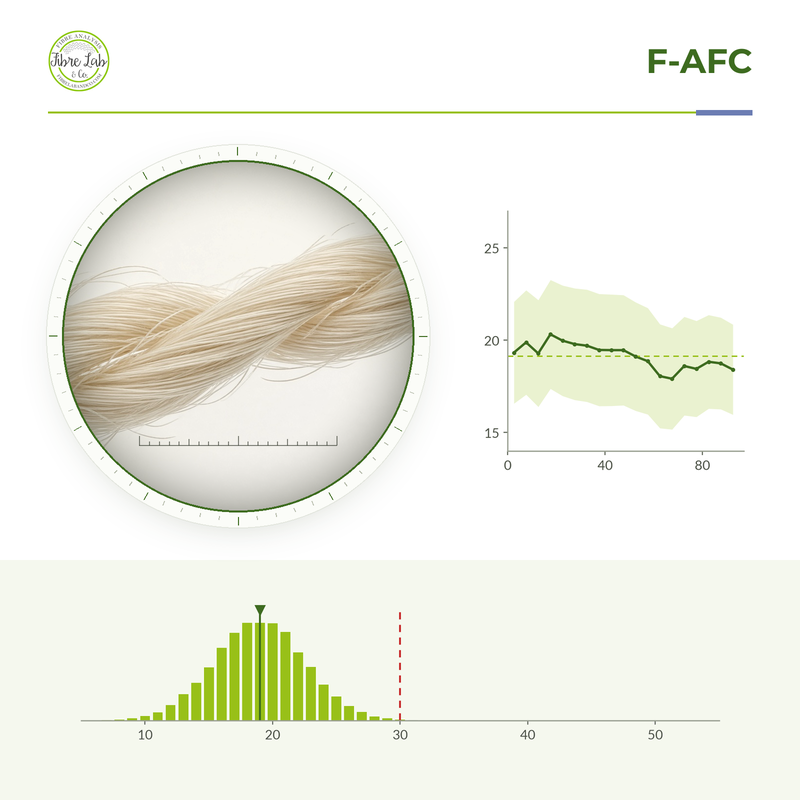
The fibre qualities of your yarn: mean micron, SD, CV, comfort factor, spinning fineness, curvature and diameter histogram. The report covers the analysed yarn only, to check a stated fineness, compare batches or choose a yarn for the handle you want. Results sent by email.
Product customization

Don't forget to save your customization to be able to add to cart
  • 1024 char. max
  • 1024 char. max
Quantity

New at Fibre Lab & Co: description and advice included

Your report includes a plain-language description for each yarn sample and for the whole order, with advice on next steps. At no extra cost: the “Include the description and advice” box is ticked by default; you can untick it before adding to your cart.

What you get

  • For the analysed yarn: mean fibre diameter, standard deviation (SD), coefficient of variation (CV), comfort factor (% of fibres ≤ 30 µm), spinning fineness, curvature.
  • The diameter histogram, showing the share of fine and coarse fibres in the yarn.
  • A report sent by email. It describes the yarn only: no animal, no species fineness class. The staple-specific indicators of the herd report (along-staple profile, Fine From Tip, MaxD, MinD, BaseD, SD Along, SD Across, staple length) do not apply to a yarn.

Our method

  • Measured on OFDA 2000, in-house method derived from IWTO-47, on a sample of your yarn.
  • Daily instrument self-test and a reference staple with every batch. See our quality charter.

Reading your results

Mean micron gives the fineness; SD and comfort factor give the handle: the lower the SD and the higher the comfort factor, the softer and more even the yarn. To compare two yarns, have them tested the same way.

Preparing the yarn sample

  • About 1 metre of yarn, fully dry.
  • In a paper envelope (no plastic), unsealed and not stapled.
  • Write the yarn reference on the envelope (name, batch or colour).
  • Put the information sheet (PDF) in the parcel.

Why these packing instructions?

  • Paper envelope or bag: paper lets the sample adjust to the temperature and humidity of the testing room. The OFDA 2000 corrects for temperature and humidity, provided the fibres are at the same temperature and humidity as the room at the time of testing: this is what makes the results accurate.
  • No staples: so nobody gets hurt when opening it.
  • No tape: fibres would stick to the tape when opened.
  • One labelled envelope per yarn: yarn reference (name, batch or colour), to avoid mix-ups.

Turnaround: 1 to 2 weeks after receipt, up to 1 month during shearing season.

Sample return: if you would like your yarn sample back after analysis, tick "Return my samples after analysis (+€12 per order)" just before the Add to cart button. Only one return is charged per order, whatever the number of analyses.

OFDA 2000 fibre test - Fibre Lab metrological control programme (charter v3.0)

Measurement on the OFDA 2000 in staple mode, using an in-house method derived from IWTO-47. Documented internal checks every test day and for every batch. Internal metrology control programme - in-house method derived from IWTO-47. Rigor rests on the procedure below.

How we stand behind the result

  • Daily OFDA 2000 autotest on internal calibration fibres (10-100 µm). Outside manufacturer tolerance = no client testing.
  • One batch reference staple (max deviation 0.3 µm on mean diameter).
  • Weekly inter-series check on archive samples (same 0.3 µm threshold).
  • Options always shown on the report: washing, correction factor, Trim High.
  • If a check falls outside limits: testing stops until control is restored.

A result is only meaningful if the process is the same from one batch to the next. Our charter describes that process.

See charter v3.0

F-AFC
Comments (0)
No customer reviews for the moment.